
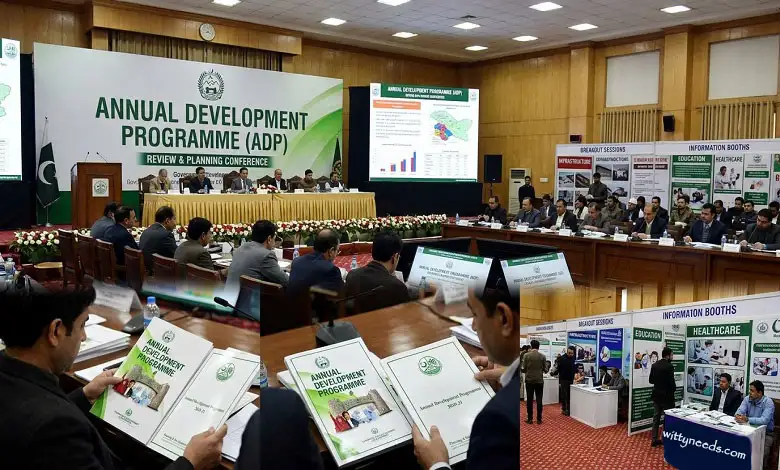
Development is a continuous and organized effort. No country can achieve economic growth, social progress, or infrastructure expansion without proper planning. One of the most effective tools used by governments—especially in developing nations—is the Annual Development Programme (ADP).
The ADP is not just a yearly document; it is the backbone of public investment planning. It determines how a government transforms policies into real projects that affect people’s daily lives—roads, schools, hospitals, electricity, and more.
This expanded article provides a deeper and more comprehensive understanding of the ADP, drawing on real examples, planning practices, and structural insights.
What is an Annual Development Programme (ADP)?
An Annual Development Programme (ADP) is the government’s annual investment plan, which lists development projects and allocates funds for their execution within a fiscal year.
In technical terms, the ADP is:
- An organized list of development projects
- A financial allocation framework
- A policy implementation tool
It is usually prepared as part of a broader development strategy, such as a Five-Year Plan.
In simple words, the ADP is the answer to:
- What development projects will be carried out this year?
- How much money will be spent?
- Which sectors will be prioritized?
Concept and Nature of ADP
The ADP can be understood in three important ways:
1. Operational Document
It is the working document of development policy, containing all approved projects for implementation.
2. Public Investment Plan
It represents the government’s annual capital investment, focusing on long-term growth rather than routine expenses.
3. Budgetary Instrument
It forms a major part of the national budget and directly influences economic performance.
Historical Background of ADP
The idea of ADP evolved from long-term development planning.
- Origin linked to Five-Year Plans
- First introduced in South Asia during the mid-20th century
- In Bangladesh, structured ADP planning dates back to the 1960s and early 1970s
Initially, development plans were long-term and difficult to implement. Governments later realized the need to divide them into annual, manageable segments, leading to the ADP system.
Objectives of the Annual Development Programme
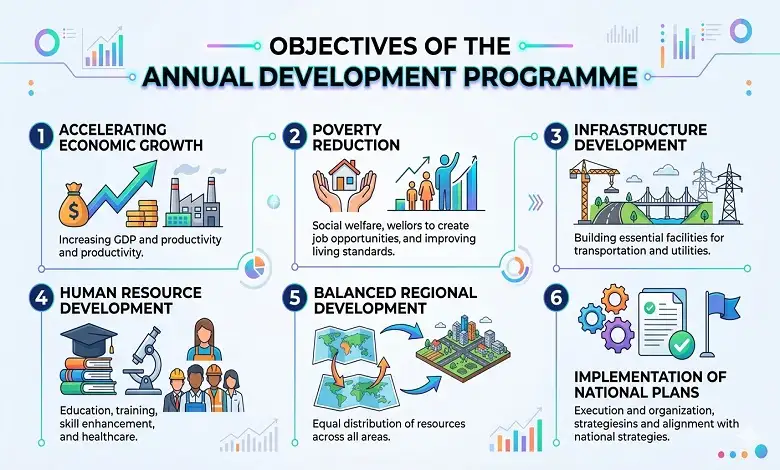
The ADP is designed to achieve multiple national goals in a structured and coordinated way.
1. Accelerating Economic Growth
By investing in productive sectors such as infrastructure, industry, and energy, the ADP helps increase national output. It also creates a strong foundation for long-term economic expansion by improving connectivity and efficiency.
2. Poverty Reduction
A significant portion of ADP funding is directed toward rural development, employment generation, and social safety programs. These initiatives help improve income levels and reduce inequality, especially among disadvantaged populations.
3. Infrastructure Development
The ADP supports the construction of roads, bridges, ports, and public facilities. Strong infrastructure not only improves daily life but also enhances trade and industrial activities.
4. Human Resource Development
Investments in education, training, and healthcare help build a skilled and healthy workforce. This is essential for sustaining economic growth in the long run.
5. Balanced Regional Development
The ADP ensures that less-developed regions receive adequate attention and funding. This helps reduce regional disparities and promotes inclusive growth across the country.
6. Implementation of National Plans
Long-term strategies like Five-Year Plans require yearly execution. The ADP breaks these strategies into practical, achievable steps for each fiscal year.
Major Components of Annual Development Programme
A typical ADP includes the following components:
1. Project Portfolio
- Ongoing projects (priority)
- New projects
- Special or fast-track projects
2. Sectoral Distribution
Funds are allocated across key sectors:
- Transport and communication
- Energy and power
- Education
- Health
- Agriculture
3. Financial Allocation
Each project receives a specific amount based on priority and feasibility.
4. Funding Sources
The ADP is financed through:
- Government’s own resources
- Foreign loans and grants
- Funds from autonomous bodies
5. Implementation Framework
Each project includes timelines, executing agencies, and expected outcomes.
Types of Projects in ADP
Different types of projects are included in the Annual Development Programme depending on their nature and purpose.
1. Investment Projects
These are large-scale physical development projects such as highways, bridges, power plants, and industrial zones. They usually require significant funding and have long-term economic benefits.
2. Technical Assistance Projects
These projects focus on improving skills, research, and institutional capacity. They may include training programs, feasibility studies, and policy development initiatives.
3. Self-Financed Projects
Some projects are funded by government agencies or autonomous organizations using their own resources. These projects reduce pressure on the central budget while still contributing to development.
4. Fast-Track or Priority Projects
Certain high-impact projects are given special priority due to their importance. These projects often receive faster approvals and closer monitoring to ensure timely completion.
Annual Development Programme Formulation Process (Detailed)
The preparation of the ADP involves several stages to ensure proper planning and coordination.
Step 1: Policy Direction
The government sets national priorities based on economic conditions and development goals. These priorities guide all ministries in preparing their proposals.
Step 2: Project Identification
Ministries and agencies identify potential projects based on sectoral needs and public demand. They also consider ongoing projects that require continued funding.
Step 3: Feasibility Analysis
Each project is evaluated for technical viability, cost-effectiveness, and expected benefits. This step helps avoid unnecessary or poorly designed projects.
Step 4: Inter-Ministerial Consultation
Different ministries coordinate to ensure that projects are aligned and not duplicated. This step improves efficiency and promotes integrated development.
Step 5: Draft ADP Preparation
The planning authority compiles all approved projects into a draft document. Budget allocations are adjusted based on available resources and priorities.
Step 6: Approval by Authorities
The draft ADP is reviewed by high-level committees and finalized after necessary revisions. This ensures that the plan reflects national interests.
Step 7: Budget Integration
The ADP is incorporated into the national budget and presented for approval. This step ensures financial backing for all projects.
Step 8: Publication and Implementation
After approval, the Annual Development Programme is officially published and implemented by executing agencies. Regular monitoring begins from this stage.
Size and Growth of Annual Development Programme
The size of ADP has increased significantly over time.
- In the 1980s: a few thousand crores
- Recent years: over Tk 2.3 trillion (approx.)
This growth reflects:
- Expanding development needs
- Population growth
- Increased focus on infrastructure and modernization
Sectoral Allocation and Priority Areas
The ADP distributes funds across various sectors based on national needs and priorities.
Infrastructure
A large share of the ADP is allocated to transport and communication. This includes roads, railways, ports, and urban transport systems that support economic activities.
Energy
Energy projects receive significant attention because they are essential for industrial growth. Investments include power generation, transmission, and renewable energy initiatives.
Social Sectors
Education and healthcare sectors are prioritized to improve human development. These investments have long-term benefits for society and the economy.
Agriculture
Funds are allocated to irrigation, rural infrastructure, and agricultural technology. This helps ensure food security and supports rural livelihoods.
Urban Development
With rapid urbanization, cities require better housing, sanitation, and transport systems. The ADP increasingly focuses on improving urban living conditions.
Role of Annual Development Programme in Economic Development
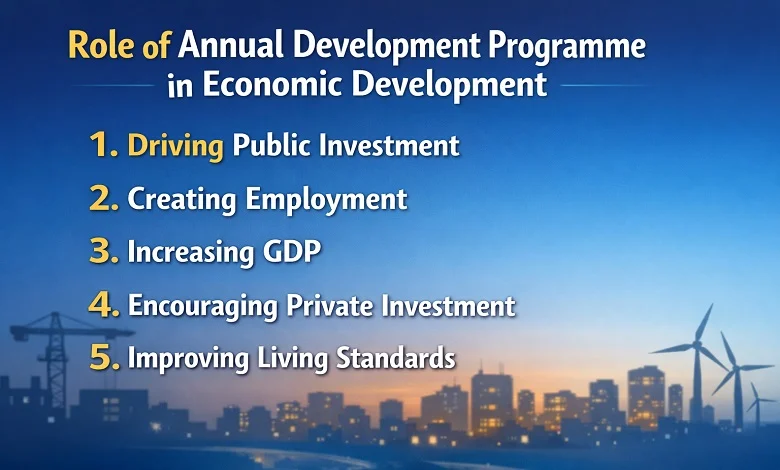
The ADP plays a vital role in shaping a country’s economic progress.
1. Driving Public Investment
The ADP is the main channel through which governments invest in development. It directs funds toward sectors that have the highest impact on growth.
2. Creating Employment
Large-scale development projects generate jobs in construction, engineering, and related industries. This helps reduce unemployment and boost income levels.
3. Increasing GDP
Well-planned investments improve productivity and contribute directly to national income. Over time, this leads to sustained economic growth.
4. Encouraging Private Investment
Improved infrastructure and services attract private investors. Businesses are more likely to invest in areas with reliable transport, energy, and communication systems.
5. Improving Living Standards
Development projects enhance access to essential services like education, healthcare, and clean water. This leads to a better quality of life for citizens.
Monitoring and Evaluation of Annual Development Programme
Effective monitoring ensures that projects achieve their objectives.
Key Mechanisms:
- Progress reporting
- Field inspections
- Financial audits
Specialized institutions like monitoring divisions are responsible for overseeing ADP implementation and evaluating performance.
Major Challenges of Annual Development Programme (ADP)
Despite its importance, the ADP faces several practical difficulties.
1. Project Delays
Many projects are not completed on time due to administrative delays and poor coordination. These delays often reduce the effectiveness of development efforts.
2. Cost Overruns
When projects are delayed, their costs tend to increase significantly. This puts additional pressure on government finances.
3. Low Implementation Rate
In some cases, only a small portion of allocated funds is used within the fiscal year. This indicates inefficiency in execution.
4. Weak Planning
Poor project design and inadequate feasibility studies can lead to unsuccessful outcomes. This results in wasted resources.
5. Administrative Bottlenecks
Complex procedures and slow decision-making processes hinder project progress. Simplifying these processes can improve efficiency.
6. Lack of Skilled Personnel
Effective implementation requires trained professionals, which are sometimes lacking. This affects project quality and timelines.
7. Political Influence
Some projects are selected based on political considerations rather than actual need. This can reduce the overall impact of the ADP.
Recent Trends in Annual Development Programme
The ADP is evolving to meet modern development needs.
Focus on Mega Projects
Governments are increasingly investing in large infrastructure projects such as metro rail systems, bridges, and power plants. These projects have a transformative impact on the economy.
Increased Domestic Funding
There is a growing reliance on internal resources instead of foreign aid. This reflects stronger economic capacity and financial independence.
Emphasis on Sustainability
Environmental concerns are becoming more important in development planning. Many projects now focus on renewable energy and climate resilience.
Digital Monitoring Systems
Technology is being used to track project progress in real time. This improves transparency and accountability.
Decentralization
Local governments are receiving more authority and funding to implement development projects. This allows for better responsiveness to local needs.
ADP and Sustainable Development Goals (SDGs)
The ADP plays a vital role in achieving global development goals:
- Ending poverty
- Improving education
- Promoting sustainable cities
- Enhancing infrastructure
It acts as a practical mechanism for implementing international commitments at the national level.
Importance of ADP in Developing Countries
For developing nations, ADP is particularly important because:
- Resources are limited and must be carefully allocated
- Development needs are urgent and widespread
- Infrastructure gaps are significant
Without a structured program like ADP, development efforts would be inefficient and fragmented.
How to Improve ADP Effectiveness
Better Project Planning: Use data-driven approaches and realistic estimates.
Strong Monitoring Systems: Adopt real-time tracking tools.
Transparency and Accountability: Ensure public access to information.
Capacity Building: Train officials and improve institutional efficiency.
Timely Fund Release: Avoid delays in financing.
Conclusion
The Annual Development Programme (ADP) is one of the most powerful tools for national development. It transforms policy into action, allocates resources efficiently, and ensures that development goals are systematically pursued.
However, its success depends on effective planning, proper implementation, and strong monitoring. When managed well, the ADP can drive economic growth, reduce poverty, and significantly improve people’s lives.
Frequently Asked Questions (FAQs)
Q: What is the main purpose of the ADP?
A. The ADP aims to plan and implement development projects within a specific fiscal year.
Q: Who prepares the ADP?
A. The Planning Commission, along with government ministries and agencies, prepares the ADP.
Q: How is the ADP funded?
A. It is funded through government revenue, loans, foreign aid, and sometimes autonomous bodies.
Q: What types of projects are included in the ADP?
A. Infrastructure, education, health, agriculture, and energy projects are included.
Q: Why is the ADP important for economic growth?
A. It drives public investment, creates jobs, and improves infrastructure, which supports economic activity.
Q: What are the major challenges of ADP?
A. Delays, cost overruns, weak planning, and low implementation efficiency are key challenges.
Q: How does ADP relate to the national budget?
A. The ADP is a part of the national budget focusing only on development expenditure.
Q: Can ADP help reduce poverty?
A. Yes, through investments in rural development, social programs, and employment generation.
Q: What is the difference between ADP and Five-Year Plan?
A. The Five-Year Plan is long-term, while the ADP is its yearly implementation tool.
Q: What happens if ADP projects are not completed on time?
A. Delays lead to increased costs, wasted resources, and reduced development impact.