
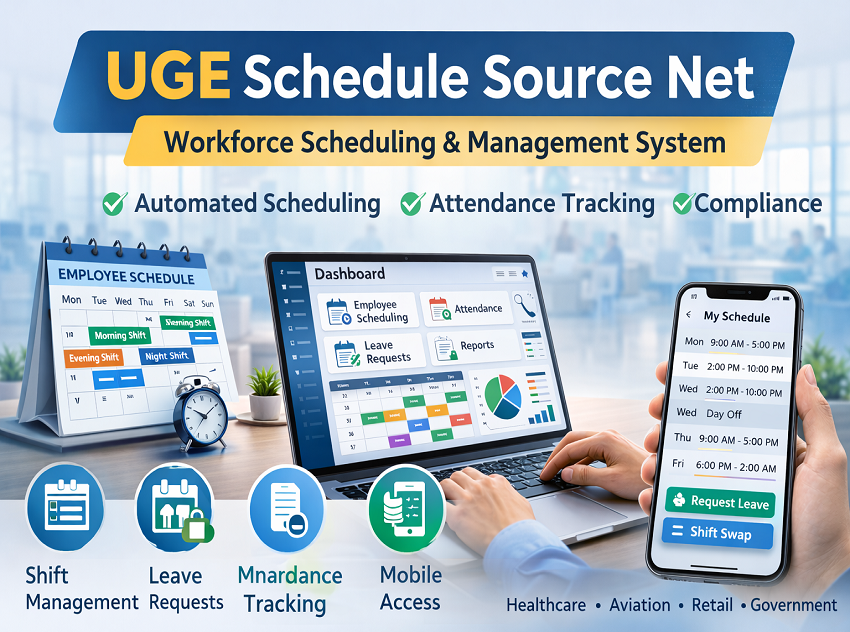
Managing employee schedules used to be a straightforward administrative task. Today, however, organizations face complex workforce challenges. Companies must balance employee availability, regulatory compliance, productivity goals, operational demand, and cost control—all while ensuring employees remain informed and engaged.
This is why many institutions rely on digital workforce platforms like UGE Schedule Source. If you have searched for uge schedule source net or want to understand how schedule source UGE works, this comprehensive guide explains everything in detail—from system functionality and features to real-world applications and common user questions.
What Exactly Is UGE Schedule Source?
UGE Schedule Source is a cloud-based workforce scheduling and employee management platform developed by ScheduleSource. It is designed to help organizations manage staff schedules, attendance, compliance requirements, and workforce reporting from one centralized system.
Rather than relying on spreadsheets or static schedules, businesses use the platform to automate workforce planning. The system stores scheduling data, employee availability, certifications, attendance records, and operational forecasts in one secure environment.
Employees, supervisors, and administrators typically access the system through their organization’s designated uge schedule source net portal, which acts as the central login and dashboard. The platform is especially useful for organizations where staffing accuracy and compliance directly affect operations, such as healthcare providers, universities, aviation companies, and government institutions.
Why Workforce Scheduling Has Become More Complex
To understand the importance of schedule source UGE, it helps to recognize how workforce management has evolved.
Modern organizations must manage:
- Rotating shifts across multiple departments
- Employees working in different locations
- Compliance with labour laws and union agreements
- Skill-based staffing requirements
- Overtime limits and rest regulations
- Changing demand patterns
Manual scheduling methods simply cannot handle these variables efficiently. Even small errors can lead to understaffed shifts, employee fatigue, compliance violations, or unexpected labour costs. A digital workforce platform solves these challenges by centralizing data and automating scheduling decisions.
How UGE Schedule Source Works in Practice
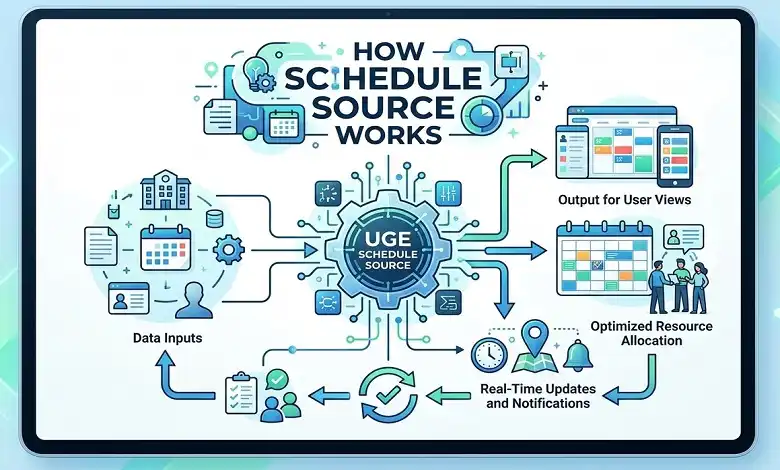
The platform operates as a centralized workforce management hub. Organizations configure their rules, staffing needs, and employee data inside the system.
Typical workflow:
- Employee profiles are created with roles, qualifications, and availability
- Scheduling rules and compliance requirements are defined
- The system generates schedules automatically
- Managers adjust shifts when needed
- Employees view schedules through the portal
- Attendance and performance data are tracked continuously
- Reports are generated for payroll, analysis, and planning
This workflow removes manual scheduling burdens while improving operational accuracy.
Detailed Features of Schedule Source UGE
To understand the true value of Schedule Source UGE, it is important to look beyond basic scheduling functions and examine the platform’s core capabilities in detail. The system is designed not only to assign shifts but also to streamline workforce coordination, enforce compliance rules, and provide actionable insights for managers. The features below highlight how the platform supports both daily operations and long-term workforce planning.
Advanced Scheduling Engine
One of the most important components of UGE Schedule Source is its rule-based scheduling engine.
Managers can define parameters such as:
- Required staffing levels
- Employee skill requirements
- Maximum shift hours
- Required rest periods
- Preferred availability
The system uses these inputs to generate schedules that balance operational needs with compliance and fairness.
This dramatically reduces scheduling conflicts and improves workforce allocation.
Comprehensive Attendance Tracking
Attendance tracking is more than recording clock-in times. The platform monitors:
- Work hours
- Overtime accumulation
- Break compliance
- Absences and tardiness
- Attendance patterns over time
This helps organizations maintain accurate payroll records and identify workforce trends that could affect productivity.
Leave and Absence Workflow Management
Instead of using emails or paperwork, employees submit leave requests directly through the platform.
Managers can view these requests alongside staffing forecasts, ensuring that approving leave does not create operational gaps.
The system can also track different leave types, such as:
- Vacation days
- Sick leave
- Personal leave
- Approved unpaid leave
This creates transparency for both employees and supervisors.
Shift Flexibility and Employee Autonomy
Many organizations struggle with last-minute scheduling conflicts. Schedule source UGE allows employees to request shift swaps or accept open shifts through the platform. This reduces administrative workload and empowers employees to manage their schedules more actively while maintaining managerial oversight.
Compliance and Regulation Support
Labour regulations vary across industries and regions. The platform can enforce scheduling rules automatically, helping organizations comply with:
- Overtime limits
- Mandatory rest periods
- Certification requirements
- Contractual obligations
This reduces the risk of fines, disputes, or legal complications related to workforce management.
Workforce Reporting and Analytics
Data-driven decision-making is a major advantage of workforce software.
The platform generates reports on:
- Labor costs by department
- Attendance reliability
- Overtime trends
- Staffing efficiency
- Scheduling accuracy
These insights allow organizations to optimize staffing strategies rather than relying on guesswork.
Mobile and Remote Access
Many organizations provide employees with mobile access connected to the uge schedule source net portal.
This allows staff to:
- Check schedules instantly
- Receive shift updates
- Submit leave requests
- Confirm attendance
- Communicate with supervisors
Mobile accessibility reduces confusion and improves workforce responsiveness.
Real-World Use Cases of UGE Schedule Source
Workforce scheduling platforms only prove their value when they solve real operational problems. UGE Schedule Source is not just a theoretical tool — it is used daily by organizations that depend on precise staffing, compliance, and coordination. The system adapts to different industries by allowing each organization to configure scheduling rules, staffing levels, and reporting structures based on its specific needs.
Below are examples of how different sectors use the platform in real environments.
Healthcare Sector
Hospitals rely on accurate scheduling to maintain patient safety. The platform ensures that qualified medical staff are assigned to shifts while respecting fatigue and rest rules.
Aviation and Transportation
Airline operations depend on strict scheduling compliance. The system helps ensure that employees meet certification and training requirements before being assigned shifts.
Higher Education Institutions
Universities use workforce platforms to manage staff across campuses, departments, and facilities, ensuring resources are allocated efficiently.
Retail and Hospitality
Retailers must align staffing with customer traffic patterns. Scheduling software helps prevent both understaffing during busy hours and unnecessary labour costs during slow periods. UGE Schedule Source allows managers to forecast staffing needs, reduce idle labour costs during quiet periods, and ensure adequate coverage during busy hours.
How to Access the UGE Schedule Source Net Portal

Each organization provides its own login link. To access the system:
- Visit your organization’s ScheduleSource login page
- Enter your username and password
- Select your role if required
- Access your schedule dashboard
If you cannot log in, your HR or IT department must assist because system access is managed internally.
Common Login Problems and Solutions
Because the UGE Schedule Source is managed internally by each organization, login experiences can vary slightly depending on company policies and system configurations. Employees sometimes encounter access issues, especially when logging in for the first time, changing devices, or returning after a period of inactivity.
Understanding common login problems and their solutions can help users regain access quickly without disrupting their work schedule.
Incorrect Password: Use the password reset feature or contact IT support.
Portal Access Error: Ensure you are using your organization’s official login link. Always use the login link provided by your employer.
Account Disabled: Some accounts may be locked after inactivity or multiple failed login attempts. IT can restore access.
Benefits of Using Schedule Source UGE
Organizations adopt workforce scheduling platforms because they provide measurable operational improvements rather than just convenience. UGE Schedule Source offers benefits that affect productivity, employee satisfaction, compliance management, and financial efficiency.
Below are the most significant advantages organizations experience after implementing the system.
Reduced Scheduling Errors
Manual scheduling often leads to mistakes such as overlapping shifts, understaffed periods, or assigning unqualified employees to specific roles.
UGE Schedule Source minimizes these risks by using rule-based scheduling logic that automatically considers staffing levels, qualifications, and availability.
This improves operational reliability and reduces the need for last-minute corrections.
Improved Employee Communication
One common problem in workforce management is poor schedule communication. Employees may miss updates, misunderstand shift changes, or fail to receive timely notifications.
With centralized access through the portal, employees can view their schedules in real time, receive alerts, and request changes directly within the system. This transparency reduces confusion and improves coordination between staff and supervisors.
Greater Workforce Transparency for Managers
Managers benefit from having a single dashboard that shows staffing levels, attendance patterns, and shift coverage.
Instead of manually checking spreadsheets or contacting multiple departments, they can quickly identify shortages, overtime risks, or absentee trends. This visibility allows faster decision-making and more proactive workforce management.
Better Compliance and Risk Reduction
Labour laws and internal policies often require organizations to monitor overtime limits, rest periods, and staffing qualifications. Failure to comply can result in financial penalties or legal issues.
UGE Schedule Source helps enforce these rules automatically, alerting managers when schedules violate policies. This reduces compliance risks and ensures organizations operate within regulatory boundaries.
More Accurate Payroll and Labour Cost Control
Accurate time tracking helps organizations generate reliable payroll data and control labour expenses.
By monitoring attendance and overtime trends, organizations can adjust schedules to prevent unnecessary spending while maintaining operational efficiency.
This financial insight is one of the strongest long-term benefits of workforce management software.
Improved Employee Satisfaction and Retention
Employees value predictable schedules, fair shift distribution, and the ability to manage requests easily.
Features such as shift swaps, leave tracking, and real-time schedule visibility give employees greater control over their work lives. This often leads to higher job satisfaction and lower turnover rates.
Scalable Workforce Management
As organizations grow, manual scheduling becomes increasingly difficult. UGE Schedule Source provides a scalable system that can handle larger teams, additional departments, and more complex staffing rules without increasing administrative workload.
This makes it a long-term solution rather than a temporary scheduling tool.
Future Trends in Workforce Scheduling Technology
Workforce platforms continue to evolve. Future developments may include:
- Predictive staffing based on demand forecasting
- Integration with payroll and HR systems
- AI-assisted scheduling recommendations
- Real-time workforce optimization tools
Organizations adopting advanced scheduling platforms today are better prepared for future workforce challenges.
Conclusion
UGE Schedule Source is a comprehensive workforce scheduling and management platform designed for organizations that require precision, compliance, and operational visibility.
Through centralized access via uge schedule source net, businesses can streamline workforce planning, reduce scheduling errors, and improve productivity across departments.
As workforce management becomes more complex, platforms like schedule source UGE are becoming essential tools for organizations seeking efficiency, transparency, and better coordination.
FAQs:
Q: What is the purpose of the UGE Schedule Source Net portal?
A. The portal allows employees and managers to access schedules, track attendance, submit requests, and monitor workforce information.
Q: What is UGE Schedule Source primarily used for?
A. It is used to manage employee scheduling, attendance, leave requests, and workforce compliance in one centralized platform.
Q: Who can access schedule source UGE?
A. Only employees of organizations that use the system can access it, and login credentials are provided internally.
Q: Can the system prevent scheduling conflicts?
A. Yes. It uses rules and availability data to reduce conflicts and ensure proper staffing coverage.
Q: Does UGE Schedule Source help with payroll accuracy?
A. Yes. Accurate attendance tracking helps organizations generate reliable payroll data.
Q: Is training required to use the platform?
A. Most organizations provide onboarding support, but the interfaces are generally user-friendly.
Q: Can employees manage their own schedules?
A. They can view schedules, request leave, and propose shift swaps, but approvals depend on organizational policies.
Read More: