
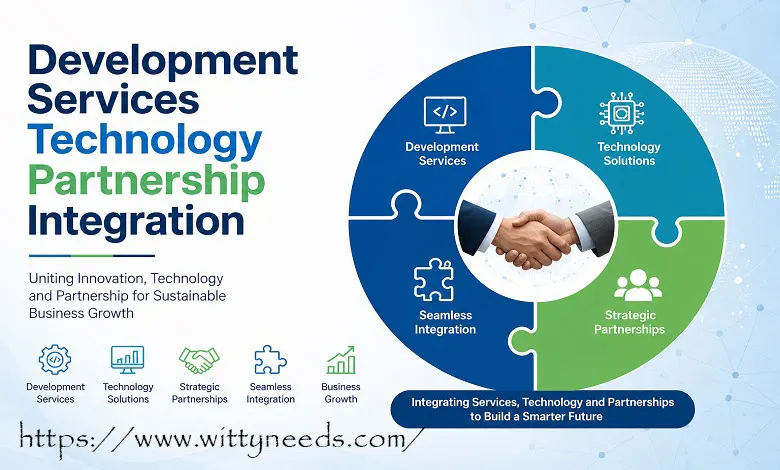
Digital transformation is no longer a future trend. It is now a core requirement for businesses that want to survive and grow in competitive markets. Companies across industries are adopting advanced technologies to improve operations, automate workflows, strengthen customer experiences, and scale efficiently. However, using multiple disconnected systems often creates more problems than solutions. This is where development services technology partnership integration becomes essential.
Businesses today rely on cloud platforms, CRMs, APIs, AI tools, enterprise software, analytics systems, mobile applications, and cybersecurity solutions. Without proper integration, these technologies operate separately, creating data silos, workflow inefficiencies, communication gaps, and operational delays.
A strong technology partnership integration strategy helps businesses connect all systems into a unified digital ecosystem. It improves operational performance, boosts productivity, enhances security, and supports long-term scalability.
In this comprehensive guide, you will learn:
- What do development services, technology partnership, and integration mean
- Why businesses need technology integration
- Core components of successful integration
- Major business benefits
- Common integration challenges
- Best practices for implementation
- Future trends in technology integration
- Frequently asked questions
If you want to improve your business infrastructure, increase efficiency, and stay ahead in the digital economy, this guide will help you understand everything about development services technology partnership integration.
What Is Development Services Technology Partnership Integration?
Development services technology partnership integration refers to the process of connecting software systems, digital platforms, cloud services, and business applications through strategic technology partnerships.
It combines:
- Custom software development
- API integration
- Cloud computing
- Enterprise software integration
- Data synchronization
- Cybersecurity solutions
- AI automation
- DevOps services
The goal is to create a centralized and connected digital infrastructure where all technologies communicate efficiently.
Instead of operating isolated systems, businesses build integrated ecosystems that support automation, real-time data access, collaboration, and scalable growth.
For example, an eCommerce company may integrate:
- Online store platform
- CRM software
- Payment gateways
- Inventory systems
- Shipping platforms
- Marketing automation tools
This allows all systems to work together automatically without manual intervention.
Why Development Services Technology Partnership Integration Is Important
Modern businesses depend heavily on technology. However, using multiple disconnected tools creates operational complexity.
Without proper integration, companies often face:
- Duplicate data entry
- Inefficient workflows
- Delayed communication
- Poor customer experiences
- Increased operational costs
- Limited scalability
- Security vulnerabilities
Technology partnership integration solves these issues by creating seamless communication between systems.
Key Reasons Businesses Need Integration
Improved Operational Efficiency: Integrated systems automate repetitive tasks and reduce manual work.
Better Customer Experience: Connected customer data enables personalized interactions and faster support.
Real-Time Data Access: Businesses can access accurate information instantly for smarter decision-making.
Enhanced Scalability: Integrated infrastructure supports long-term business growth.
Reduced Costs: Automation and streamlined operations lower operational expenses.
Faster Innovation: Technology partnerships help businesses adopt emerging technologies more efficiently.
Core Components of Development Services Technology Partnership Integration
1. Custom Software Development
Custom software development helps businesses create tailored solutions based on operational requirements.
Unlike generic software, custom applications provide:
- Better flexibility
- Improved scalability
- Higher compatibility
- Industry-specific functionality
Examples include:
- Enterprise applications
- SaaS platforms
- Internal workflow systems
- Mobile apps
- Customer portals
Custom development ensures seamless integration with existing systems.
2. API Integration Services
APIs (Application Programming Interfaces) allow software systems to exchange data and communicate effectively. API integration is one of the most important aspects of modern technology ecosystems. Businesses use APIs to connect:
- CRM systems
- Payment gateways
- ERP platforms
- Marketing tools
- Cloud services
- Analytics platforms
Strong API integration improves:
- Workflow automation
- Data synchronization
- Operational speed
- Customer experiences
Without APIs, modern digital transformation would not be possible.
3. Cloud Integration Solutions
Cloud integration connects cloud-based applications with internal business systems.
Popular cloud platforms include:
- AWS
- Microsoft Azure
- Google Cloud
Cloud integration benefits include:
- Remote accessibility
- Better collaboration
- Reduced infrastructure costs
- Improved scalability
- Faster deployment
- Business continuity
Cloud-based ecosystems are now essential for modern businesses.
4. Enterprise System Integration
Large organizations use multiple enterprise applications simultaneously.
Enterprise integration connects:
- ERP software
- HR systems
- Accounting tools
- Supply chain software
- Customer management platforms
This creates a centralized infrastructure that improves cross-department collaboration.
5. Data Integration and Analytics
Businesses generate massive amounts of data every day. Data integration consolidates information from multiple systems into unified dashboards and analytics platforms.
Benefits include:
- Real-time reporting
- Predictive analytics
- Better forecasting
- Improved decision-making
- Customer behavior analysis
Data-driven businesses make faster and more strategic decisions.
6. Cybersecurity Integration
As systems become more connected, cybersecurity becomes increasingly important.
Technology integration partners help businesses implement:
- Data encryption
- Identity management
- Endpoint security
- Threat monitoring
- Secure API gateways
- Compliance frameworks
Strong cybersecurity protects integrated digital ecosystems from threats and vulnerabilities.
Benefits of Development Services Technology Partnership Integration
Increased Productivity
Automation reduces repetitive tasks and improves workflow efficiency. Employees can focus on higher-value activities instead of manual processes.
Faster Business Operations
Integrated systems streamline communication between departments and software platforms.
This improves:
- Order processing
- Customer service
- Reporting
- Inventory management
- Internal collaboration
Improved Customer Experience
Businesses can provide faster and more personalized customer interactions through connected systems.
Examples include:
- Automated support systems
- Personalized recommendations
- Faster response times
- Omnichannel communication
Better Decision-Making
Integrated analytics platforms provide real-time business insights.
This helps companies:
- Track performance
- Monitor KPIs
- Identify trends
- Optimize operations
Long-Term Scalability
Integrated infrastructures support future business expansion without requiring complete system replacements.
Businesses can easily add:
- New software
- Additional services
- New departments
- Advanced technologies
Competitive Advantage
Companies with efficient digital ecosystems respond faster to market changes and customer demands. This creates a significant competitive advantage.
Industries Using Technology Partnership Integration
Healthcare Industry
Healthcare organizations integrate:
- Electronic health records
- Telemedicine systems
- Appointment scheduling software
- Billing platforms
Benefits include:
- Faster patient care
- Better data accessibility
- Improved compliance
- Enhanced communication
eCommerce Industry
eCommerce businesses depend heavily on integration services.
Connected systems improve:
- Inventory tracking
- Payment processing
- Customer management
- Shipping automation
- Marketing campaigns
Integrated ecosystems increase efficiency and customer satisfaction.
Financial Services
Banks and financial institutions use integration for:
- Fraud detection
- Digital banking
- Compliance management
- Secure transactions
Cybersecurity integration is especially important in finance.
Manufacturing Industry
Manufacturers integrate:
- Supply chain systems
- IoT devices
- Inventory software
- Production monitoring tools
This improves operational visibility and efficiency.
Education Sector
Educational institutions integrate:
- Learning management systems
- Student databases
- Virtual classrooms
- Collaboration tools
Digital education environments depend on scalable, integrated systems.
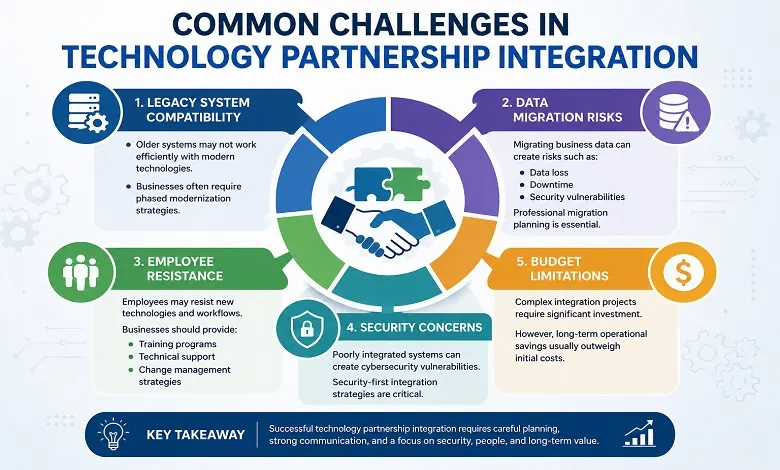
Common Challenges in Technology Partnership Integration
Legacy System Compatibility
Older systems may not work efficiently with modern technologies. Businesses often require phased modernization strategies.
Data Migration Risks
Migrating business data can create risks such as:
- Data loss
- Downtime
- Security vulnerabilities
Professional migration planning is essential.
Employee Resistance
Employees may resist new technologies and workflows.
Businesses should provide:
- Training programs
- Technical support
- Change management strategies
Security Concerns: Poorly integrated systems can create cybersecurity vulnerabilities. Security-first integration strategies are critical.
Budget Limitations: Complex integration projects require significant investment. However, long-term operational savings usually outweigh initial costs.
Best Practices for Successful Technology Integration
Define Clear Business Goals
Businesses should identify:
- Operational objectives
- Integration priorities
- Performance metrics
- Budget expectations
Choose the Right Technology Partner
A strong integration partner should provide:
- Technical expertise
- Industry experience
- Scalability planning
- Cybersecurity knowledge
Prioritize Scalability: Infrastructure should support future growth and technology upgrades.
Focus on User Experience: Technology should simplify workflows instead of creating complexity.
Implement Strong Cybersecurity: Security should be integrated into every stage of development and integration.
Continuously Monitor Performance
Businesses should regularly evaluate:
- System performance
- Workflow efficiency
- Security status
- User adoption
Continuous optimization improves long-term results.
Future Trends in Development Services Technology Partnership Integration
AI-powered systems are transforming business operations through:
- Predictive analytics
- Intelligent automation
- AI chatbots
- Smart recommendations
Hyperautomation
Businesses are increasingly automating complete workflows using:
- AI
- Machine learning
- Robotic process automation
Internet of Things (IoT)
Connected devices are expanding across industries, including:
- Manufacturing
- Healthcare
- Logistics
- Smart cities
Multi-Cloud Strategies
Organizations are using multiple cloud providers to improve:
- Flexibility
- Reliability
- Scalability
Low-Code and No-Code Development
Simplified development platforms are making integration faster and more accessible.
How Technology Partnership Integration Supports SEO and Digital Growth
Many businesses overlook the connection between technology integration and SEO performance.
Integrated systems improve:
- Website speed
- Mobile responsiveness
- User experience
- Technical SEO
- Data management
- Security
Search engines prioritize websites that provide fast, secure, and seamless experiences.
Integrated digital ecosystems support:
- Better website performance
- Faster page loading
- Improved Core Web Vitals
- Enhanced customer engagement
This contributes directly to better search engine rankings.
Why Long-Term Technology Partnerships Matter
Technology evolves rapidly. Businesses need strategic partners who can support continuous innovation.
Long-term technology partnerships help organizations:
- Adapt to emerging technologies
- Improve infrastructure continuously
- Reduce technical debt
- Optimize digital performance
- Maintain competitive advantage
Strong partnerships create sustainable digital growth.
Frequently Asked Questions (FAQs)
Q: What is development services technology partnership integration?
A. It is the process of connecting business software, cloud systems, APIs, and digital platforms through strategic technology partnerships to create efficient and scalable digital ecosystems.
Q: Why is technology integration important for businesses?
A. Technology integration improves efficiency, automation, customer experience, data accessibility, scalability, and operational performance.
Q: What are the main components of technology partnership integration?
- The main components include:
- Enterprise software integration
- Custom software development
- API integration
- Cloud integration
- Data management
- Cybersecurity
Q: How does API integration help businesses?
A. API integration allows different software systems to communicate and exchange data automatically, improving workflow efficiency and automation.
Q: What industries benefit from technology integration?
A. Industries including healthcare, finance, manufacturing, eCommerce, logistics, and education benefit significantly from technology partnership integration.
Q: What are the biggest challenges in technology integration?
- Common challenges include:
- Budget limitations
- Legacy system compatibility
- Data migration risks
- Security vulnerabilities
- Employee resistance
Q: How does technology integration improve SEO?
A. Integrated systems improve website speed, user experience, technical performance, and security, all of which support better search engine rankings.
Q: What should businesses look for in a technology integration partner?
- Businesses should evaluate:
- Communication quality
- Technical expertise
- Industry experience
- Security capabilities
- Scalability planning
Final Thoughts
Development services technology partnership integration is now a critical business strategy rather than a technical option.
Modern businesses depend on integrated digital ecosystems to:
- Improve operational efficiency
- Automate workflows
- Enhance customer experiences
- Strengthen cybersecurity
- Support scalable growth
As cloud computing, AI, automation, and connected technologies continue evolving, businesses with strong integration strategies will dominate their industries.
Companies that invest in development services, technology partnership integration today are building smarter, faster, and more scalable businesses for the future.
One thought on “Development Services Technology Partnership Integration: The Complete Guide for Modern Businesses”
Comments are closed.