
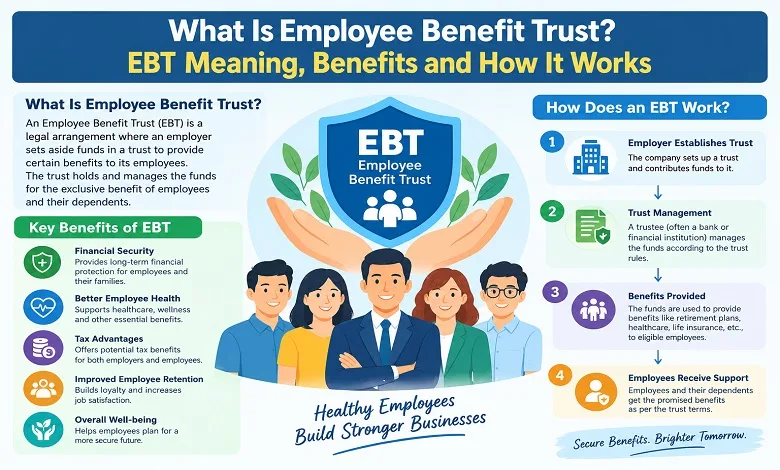
An Employee Benefit Trust (EBT) is a trust established to hold and manage assets for the benefit of employees or other eligible beneficiaries. Businesses may use EBTs for employee incentives, share arrangements, welfare benefits, or longer-term employee ownership objectives.
If you are researching what is employee benefit trust, it is important to understand that an EBT is not a single type of employee benefit scheme. Its purpose, structure, trustees, beneficiaries, assets, and tax treatment can vary depending on how the trust is established and operated.
In the UK, EBT arrangements can involve detailed legal, tax, and governance requirements. They should also be distinguished from Employee Ownership Trusts (EOTs), which have specific statutory conditions.
This guide explains what is employee benefit trust, how EBTs work, their common uses, benefits and limitations, taxation, and the difference between EBTs and EOTs.
What Is Employee Benefit Trust?
So, what is employee benefit trust in practical terms?
An Employee Benefit Trust is a trust created by a company or employer to provide benefits to employees or other eligible beneficiaries. The trust is managed by trustees, who are responsible for holding and administering the trust assets according to the trust deed and applicable laws.
Depending on its structure, an EBT may hold cash, shares, investments, or other assets. The trust can then use those assets for purposes set out in its governing documents.
For example, a company may establish an EBT to support employee incentive arrangements or hold company shares for the benefit of employees. However, creating an EBT does not automatically mean that employees become direct owners of the company.
The exact rights of employees depend on the terms of the trust and the specific arrangement.
What Does EBT Stand For?
EBT stands for Employee Benefit Trust.
The term is commonly used for trusts designed to provide benefits to employees. The benefits can vary considerably. Some arrangements focus on employee incentives, while others may involve company shares, welfare benefits, or employee ownership.
This is why understanding what is employee benefit trust requires looking beyond the name and examining how the particular trust has been established and what it is intended to achieve.
How Does an Employee Benefit Trust Work?
An EBT generally involves three main elements: the company, the trustees, and the employees or other beneficiaries.
The company establishes or contributes to the trust, while trustees administer the trust assets. The trustees then operate the trust according to its governing documents.
A simplified process looks like this:
- The company establishes the trust.
- Trustees are appointed to manage it.
- The company or another party transfers assets to the trust.
- The trustees hold and manage those assets.
- Eligible employees or beneficiaries may receive benefits according to the trust’s terms.
- Trustees continue to manage the trust and comply with relevant legal and tax obligations.
The exact process can differ significantly between arrangements. A properly drafted trust deed is therefore important because it establishes the purpose of the trust and the powers and responsibilities of the trustees.
Who Is Involved in an Employee Benefit Trust?
Several parties may have a role in an EBT. Their responsibilities depend on the specific structure.
| Party | Typical Role |
| Employer or company | Establishes or funds the trust and defines its business purpose |
| Trustees | Hold and administer trust assets |
| Employees | May receive benefits if they meet the relevant conditions |
| Beneficiaries | Individuals or groups entitled to benefits under the trust |
| Professional advisers | May provide legal, tax, accounting, or governance advice |
Trustees have an important responsibility because they must administer the trust according to its governing documents and applicable legal requirements.
What Can an Employee Benefit Trust Be Used For?
The purpose of an EBT depends on the company’s objectives and the trust’s terms.
Common uses can include:
Employee Incentives
A company may use an EBT as part of an employee incentive structure. This can provide a framework for distributing certain benefits to eligible employees.
Company Shares
An EBT can potentially hold shares in the employer company. The way those shares are held and the benefits employees receive will depend on the trust arrangement.
Employee Ownership
Some businesses use trust structures as part of a wider strategy to increase employee ownership or employee participation.
However, an EBT should not automatically be treated as an employee ownership structure. Specific legal requirements may apply depending on the intended ownership model.
Welfare and Other Benefits
Depending on the trust’s terms, an EBT may be designed to support certain employee welfare benefits or other forms of assistance.
The availability and tax treatment of particular benefits depend on the arrangement and applicable legislation.
What Is Employee Benefit Trust Used For in the UK?
In the UK, EBTs can be used for a variety of employee-related purposes, but their tax and legal treatment depends on the specific facts.
Businesses considering an EBT may need to consider:
- The purpose of the trust
- The identity of beneficiaries
- The assets transferred to the trust
- Trustee responsibilities
- Company and employee tax implications
- Reporting obligations
- Employment-related securities rules where shares are involved
- Applicable trust taxation
- Anti-avoidance legislation
UK businesses should obtain appropriate professional advice before implementing a significant EBT structure because tax legislation and guidance can change.
EBT vs EOT: What Is the Difference?
EBTs and EOTs are related concepts, but they are not interchangeable.
An Employee Ownership Trust (EOT) is a specific statutory trust structure designed to hold a controlling interest in a company for the benefit of employees, subject to qualifying conditions.
The difference can be summarized as follows:
| Feature | Employee Benefit Trust (EBT) | Employee Ownership Trust (EOT) |
| Main purpose | Can support various employee benefits | Designed specifically for employee ownership |
| Company shares | May hold shares depending on structure | Must meet specific ownership requirements |
| Employee ownership | Not automatically created | Structured around employee ownership |
| Legal requirements | Depends on trust structure | Specific statutory conditions apply |
| Tax treatment | Depends on circumstances | Special tax rules may apply when qualifying conditions are met |
| Flexibility | Can be structured for different objectives | More specifically focused on employee ownership |
Therefore, when asking what is employee benefit trust, it is important not to assume that every EBT is an EOT.
What Are the Benefits of an Employee Benefit Trust?
An EBT can provide businesses with a structured framework for managing employee-related assets and benefits.
Potential advantages include:
Flexible Benefit Structure
An EBT can be designed around specific business objectives, subject to the applicable legal and tax rules.
Support for Employee Incentives
Businesses may use trust arrangements as part of broader employee incentive strategies.
Potential Shareholding Structure
Where appropriate, an EBT can hold company shares for employee-related purposes.
Long-Term Planning
A trust structure may support longer-term employee benefit or ownership plans rather than relying entirely on short-term incentive arrangements.
Centralized Administration
Trustees can provide a formal structure for holding and administering certain assets intended for employee benefit.
The actual advantages depend on how the trust is designed and operated.
What Are the Disadvantages of an Employee Benefit Trust?
An EBT can also introduce additional responsibilities and costs.
Some potential challenges include:
- Legal and professional setup costs
- Trustee administration
- Accounting and reporting requirements
- Complex tax considerations
- Ongoing compliance responsibilities
- Potential disputes over trust administration
- Additional governance requirements
- Changing tax legislation
For smaller businesses, the cost and complexity of maintaining an EBT may need to be carefully considered.
How Is Employee Benefit Trust Taxed?
One of the most important questions after what is employee benefit trust is how the trust is taxed.
There is no single tax treatment that applies to every EBT. The tax consequences depend on factors such as:
- The type of trust
- The assets held
- How the trust is funded
- Payments or benefits provided
- Whether company shares are involved
- The residence and status of the parties
- The specific transaction
- Applicable UK tax legislation
UK-resident EBTs can be subject to tax rules applying to discretionary trusts, including relevant Income Tax and Capital Gains Tax provisions, depending on the circumstances.
Employment-related securities rules may also become relevant where an EBT acquires or distributes shares connected with employment.
Because EBT taxation can be complex, businesses should obtain advice from a qualified UK tax professional before establishing or restructuring one.
Is Employee Benefit Trust Tax-Free?
No. An EBT should not be assumed to be tax-free.
The tax treatment depends on the particular arrangement, transactions undertaken, assets held, and current legislation. Simply transferring money or shares into an EBT does not automatically make the arrangement exempt from tax.
This is an important point for anyone researching what is employee benefit trust because online descriptions sometimes make EBTs appear to be straightforward tax-saving structures.
In reality, UK legislation contains specific rules that can affect employee benefit trusts and related arrangements.
Can an Employee Benefit Trust Hold Company Shares?
Yes, an EBT can potentially hold shares in a company, depending on the structure and applicable legal requirements.
For example, a company may transfer or sell shares to trustees, who then hold those shares under the terms of the trust.
The trustees may have responsibilities relating to:
- Holding the shares
- Voting rights
- Distributions
- Employee benefit arrangements
- Share transfers
- Compliance with the trust deed
Where employees receive shares or share-related benefits, additional tax and employment-related securities rules may apply.
Do Employees Own the Company Through an EBT?
Not necessarily.
The existence of an EBT does not automatically mean employees directly own the company. The trust may hold shares on behalf of beneficiaries, but the legal ownership structure depends on the specific arrangement.
This distinction is particularly important when comparing an EBT with an EOT.
An EOT is specifically designed around employee ownership and must satisfy statutory conditions. A general EBT can have a much broader purpose.
EBT vs Employee Share Scheme
An EBT and an employee share scheme can sometimes work together, but they are not the same thing.
| Feature | EBT | Employee Share Scheme |
| Basic structure | Trust | Share or incentive arrangement |
| Main function | Holds and manages assets for beneficiaries | Provides employees with shares or share-related incentives |
| Trustees | Usually central to structure | Not necessarily required |
| Company shares | May hold shares | Often directly relevant |
| Tax treatment | Depends on circumstances | Depends on the particular scheme |
| Employee ownership | Not automatic | Depends on scheme design |
An EBT may sometimes be used as part of the infrastructure supporting an employee share arrangement.
How to Set Up an Employee Benefit Trust
Setting up an EBT should be treated as a legal and tax project rather than simply creating a trust document.
A typical process may involve the following steps:
1. Define the Purpose
The company should first determine why it wants to establish the EBT.
For example, the purpose might relate to employee incentives, share ownership, welfare benefits, or a longer-term ownership strategy.
2. Identify the Beneficiaries
The trust documents should clearly establish who may benefit from the trust.
3. Appoint Trustees
Trustees are responsible for administering the trust and dealing with its assets according to the trust deed.
4. Prepare the Trust Documentation
Legal advisers can help prepare the trust deed and supporting documentation.
5. Transfer Assets
The company or another party may transfer appropriate assets into the trust, depending on the structure.
6. Review Tax and Reporting Requirements
Before implementation, the company should assess relevant tax, accounting, employment, and reporting requirements.
7. Establish Ongoing Governance
Trustees need processes for maintaining records, making decisions, managing assets, and meeting continuing obligations.
What Should a Company Consider Before Creating an EBT?
Before establishing an EBT, businesses should consider the following:
| Area | Key Question |
| Purpose | Why is the trust needed? |
| Beneficiaries | Who should benefit? |
| Assets | What will the trust hold? |
| Trustees | Who will administer the trust? |
| Tax | What taxes could apply? |
| Employees | How will employees benefit? |
| Governance | How will decisions be made? |
| Cost | What are the setup and ongoing costs? |
| Compliance | What reporting and legal requirements apply? |
| Long-term plans | Does the structure support the company’s future objectives? |
A clear purpose is particularly important because the trust structure should support the company’s actual business and employee objectives.
Common Mistakes to Avoid With an EBT
Businesses can run into problems when they treat an EBT as a simple administrative arrangement.
Common mistakes include:
Treating an EBT as Automatically Tax-Free
An EBT can have tax consequences. Businesses should not rely on the assumption that transferring assets into a trust automatically creates a tax exemption.
Confusing EBTs With EOTs
An EBT is not automatically an Employee Ownership Trust. EOTs have specific statutory requirements.
Ignoring Trustee Responsibilities
Trustees have responsibilities that should be clearly understood before the trust is established.
Failing to Plan for Administration
An EBT may require ongoing accounting, reporting, record-keeping, and governance.
Using an Outdated Structure
UK tax legislation changes over time. Businesses should ensure that their arrangements are reviewed against current rules.
A Simple Example of an EBT
Imagine a company wants to establish a long-term employee incentive arrangement.
The company creates an EBT and appoints trustees. The trust then holds certain assets under the terms of the trust deed.
Over time, eligible employees may receive benefits from the trust according to the conditions established by the company and trustees.
The employees do not necessarily become direct shareholders simply because the EBT exists. If shares are involved, the rights and tax treatment depend on the specific structure.
This simple example shows why understanding what is employee benefit trust requires looking at the actual purpose and documentation rather than just the trust’s name.
What Happens to Employees When an EBT Is Created?
The effect on employees depends on the purpose and terms of the trust.
Employees may potentially receive:
- Financial benefits
- Incentive payments
- Share-related benefits
- Other qualifying benefits
- Benefits connected with an employee ownership arrangement
However, employees do not automatically receive benefits simply because their employer creates an EBT.
The trust deed and related arrangements determine eligibility and the conditions for receiving benefits.
Employee Benefit Trust and Employee Ownership
An EBT can form part of a company’s broader employee ownership strategy, but the two concepts should not be treated as identical.
Employee ownership can take several forms, including direct employee share ownership and trust-based ownership structures.
An EOT is specifically designed to facilitate employee ownership by allowing trustees to hold a controlling interest in a company for the benefit of employees, provided the statutory requirements are satisfied.
A general EBT, by contrast, may be established for a wider range of employee benefit purposes.
Is an EBT Suitable for Every Business?
No single trust structure is suitable for every company.
An EBT may make sense where a business has a clear long-term reason for creating a trust-based employee benefit or ownership arrangement. However, the costs, administration, tax consequences, and governance requirements should be considered carefully.
Businesses should evaluate the purpose of the proposed EBT against simpler alternatives before proceeding.
Professional legal, tax, and accounting advice can help determine whether the proposed structure is appropriate.
Final Thoughts
Understanding what is employee benefit trust starts with recognizing that an EBT is a flexible trust structure designed to hold and manage assets for employee-related purposes. Depending on its design, it can support incentives, share arrangements, welfare benefits, or longer-term employee ownership objectives.
An EBT is not automatically tax-free, and it does not necessarily give employees direct ownership of a company. Businesses should also distinguish an EBT from an EOT because the two structures have different purposes and legal requirements.
Before creating or changing an EBT, businesses should clearly define their objectives and obtain appropriate legal and tax advice based on the current rules.
Frequently Asked Questions
Q: What is employee benefit trust?
A. An Employee Benefit Trust is a trust established to hold and manage assets for the benefit of employees or other eligible beneficiaries. Depending on its structure, it can support employee incentives, share arrangements, welfare benefits, or employee ownership objectives.
Q: What is employee benefit trust used for?
A. An EBT can be used for various employee-related purposes, including incentive arrangements, holding company shares, welfare benefits, and certain employee ownership strategies.
Q: What is employee benefit trust in the UK?
A. In the UK, an EBT is generally a trust established to provide benefits to employees or other eligible beneficiaries. Its legal and tax treatment depends on the structure, assets, transactions, and applicable legislation.
Q: Is an EBT the same as an EOT?
A. No. An EOT is a specific type of trust structure designed around employee ownership and subject to statutory requirements. A general EBT can have a broader range of purposes.
Q: Is employee benefit trust tax-free?
A. No. An EBT is not automatically tax-free. The tax treatment depends on the specific arrangement and applicable legislation.
Q: Can an EBT own company shares?
A. An EBT can potentially hold company shares, depending on its structure and the relevant legal and tax rules.
Q: Do employees own the company through an EBT?
A. Not necessarily. An EBT does not automatically give employees direct ownership of a company. The ownership rights depend on the specific trust and shareholding structure.
Q: Who manages an employee benefit trust?
A. Trustees manage the trust and administer its assets according to the trust deed and applicable legal requirements.
Q: Why would a company create an EBT?
A. A company may establish an EBT to support employee incentives, hold shares, provide certain benefits, or form part of a broader employee ownership strategy.
Q: What should a business check before creating an EBT?
A. A business should consider the purpose, beneficiaries, assets, trustees, tax treatment, employee impact, governance, compliance requirements, and ongoing costs before establishing an EBT.