
Running a medical practice today involves more than just providing good care. Patients don’t always rely on word-of-mouth anymore—they search online. Whether it’s for a nearby clinic, a specialist, or urgent care, most journeys begin with a simple Google search. That’s where Google Ads for doctors comes into play. It puts your clinic in front of people at the exact moment they are looking for help. But simply running ads is not enough. Without the right structure, budget, and messaging, it’s easy to spend money without seeing real results.
This is why having a clear google ads for doctors seo outline matters. It gives direction to your campaigns and helps you focus on what actually brings in patients rather than just clicks.
Why Google Ads Works So Well for Medical Practices
Healthcare searches are different from most other industries. People are not casually browsing—they are usually looking for a solution to a problem. That makes their intent much stronger.
When someone searches for a dentist, dermatologist, or general physician, they are often ready to book. Showing up at that moment creates a direct opportunity.
Unlike social media ads, which interrupt users, Google Ads responds to demand that already exists. This is why many clinics see faster results compared to other forms of marketing.
Another reason it works well is location targeting. Patients prefer nearby clinics, so ads can be limited to specific areas, ensuring your budget is spent on the right audience.
What a Proper SEO Outline Looks Like for Google Ads
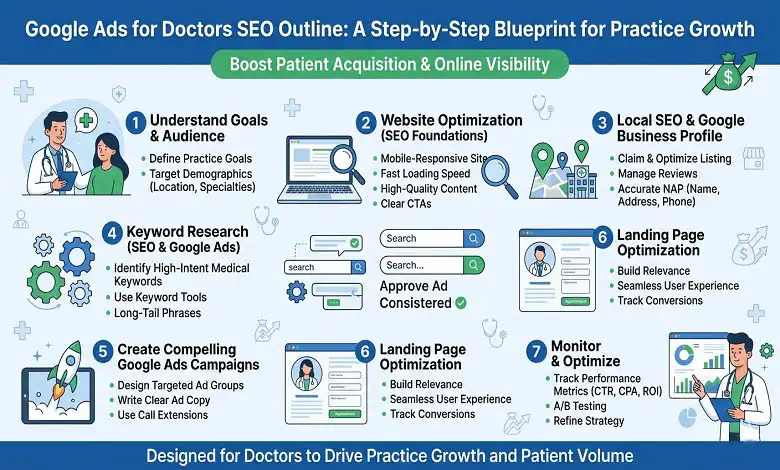
A strong google ads for doctors seo outline is not complicated, but it needs to be organized. Without structure, campaigns quickly become messy and hard to manage.
At a basic level, a good outline includes:
- Clear service-based campaigns
- Focused keyword groups
- Relevant ad copy
- Dedicated landing pages
- Conversion tracking
Instead of creating one campaign for everything, it’s more effective to separate services. For example, a clinic offering dental care and skin treatments should run separate campaigns for each.
This makes your ads more relevant to what people are searching for, which improves performance and reduces costs over time.
Choosing the Right Keywords Without Guesswork
Keyword selection is where many campaigns either succeed or fail. In healthcare, not all searches are equal.
Some people are just looking for information, while others are ready to take action. The goal is to focus on high-intent searches—those that indicate someone is likely to book an appointment.
For example, “symptoms of tooth pain” is very different from “dentist near me open now.” The second one shows immediate intent.
Using location-based keywords helps narrow down the audience further. It ensures that your ads appear for people who can actually visit your clinic.
Avoiding overly broad keywords also helps control costs and keeps your campaign focused.
Structuring Campaigns for Better Results
Many clinics make the mistake of running one general campaign with dozens of unrelated keywords. This often leads to poor performance and wasted budget.
A better approach is to group campaigns by service. Each service should have its own set of keywords, ads, and landing pages.
For instance, a clinic might have separate campaigns for:
- General consultation
- Cosmetic procedures
- Emergency care
This structure allows each campaign to perform independently and makes it easier to see what is working.
It also improves ad relevance, which plays a role in how Google ranks your ads and how much you pay per click.
Writing Ads That Patients Actually Trust
In healthcare, trust matters more than anything else. People are not just clicking on ads—they are choosing someone to take care of their health.
This means your ad copy should feel clear, honest, and reassuring.
Instead of trying to sound overly promotional, focus on what patients care about. This could include experience, availability, or convenience.
Simple details like “same-day appointments” or “experienced specialists” can make a big difference.
Adding call extensions and location details also helps patients take action quickly without needing to search further.
Why Landing Pages Matter More Than You Think
Getting clicks is only half the job. What happens after someone clicks your ad determines whether they become a patient.
A good landing page should feel simple and clear. It should explain the service, provide key details, and make it easy to book an appointment.
Patients often feel unsure when choosing a doctor, so small elements like reviews, certifications, and photos can help build confidence.
Speed also matters. If the page takes too long to load, many users will leave before even reading it.
Keeping everything focused and easy to navigate can significantly improve conversions.
Local Targeting and Timing Make a Big Difference
One of the biggest strengths of Google Ads for doctors is the ability to control who sees your ads.
Location targeting ensures that your ads are shown only to people in your area. This avoids wasting budget on users who are too far away.
Timing is another factor that often gets overlooked. For example, urgent care searches may happen late at night or early in the morning.
Adjusting your ad schedule based on patient behaviour can help capture more relevant traffic.
Together, location and timing create a more focused and efficient campaign.
Managing Budget Without Overspending
Budget is always a concern, especially for smaller clinics. The good thing about Google Ads is that you have full control over how much you spend.
Instead of starting with a large budget, it’s usually better to begin small and adjust based on performance.
Tracking cost per lead is more useful than just looking at clicks. What matters is how many of those clicks turn into actual patients.
Over time, you can increase spending on campaigns that perform well and reduce it where results are weaker.
This approach keeps your investment controlled and results-driven.
Staying Within Healthcare Advertising Guidelines
Healthcare advertising comes with certain rules, and it’s important to follow them carefully.
Some types of promotions require approval, and certain claims are not allowed. This is done to protect patients and ensure accurate information.
Being transparent and responsible in your messaging not only avoids issues but also builds trust with your audience.
Following these guidelines should be part of any google ads for doctors seo outline, as it ensures long-term stability for your campaigns.
Tracking What Actually Works
Running ads without tracking results is like guessing. To improve performance, you need to understand what is working and what is not.
Key metrics to watch include how many people click your ads, how many take action, and how much each lead costs.
Over time, patterns begin to appear. Some keywords perform better, certain ads get more attention, and specific pages convert more effectively.
Using this information, you can refine your campaigns and make better decisions.
Small adjustments over time often lead to significant improvements.
Combining SEO and Google Ads for Stronger Growth
While Google Ads delivers quick results, SEO helps build long-term visibility. Using both together creates a more balanced strategy.
Ads can bring immediate traffic, while SEO ensures that your website continues to attract visitors over time.
When patients see your clinic in both paid and organic results, it increases credibility. It also improves the chances of them choosing your practice.
This combined approach works especially well for clinics that want steady and sustainable growth.
Common Mistakes That Reduce Results
Even with a good plan, certain mistakes can limit the effectiveness of campaigns.
One common issue is targeting keywords that are too broad. This leads to irrelevant clicks and higher costs.
Another mistake is using generic ad copy that doesn’t stand out or build trust.
Poor landing pages can also reduce conversions, even if the ads are performing well.
Ignoring tracking and data is another problem. Without insights, it’s difficult to improve.
Avoiding these mistakes can make a noticeable difference in results.
FAQs About Google Ads for Doctors SEO Outline
Q: What is Google Ads for doctors?
A: It is a way for medical practices to appear at the top of search results when patients look for services.
Q: Why is an SEO outline important for ads?
A: It helps organize campaigns, improve targeting, and increase conversions.
Q: How much budget is needed?
A: It depends on the location and competition, but starting small and scaling is usually best.
Q: Do ads work better than SEO?
A: They serve different purposes. Ads are faster, while SEO builds long-term results.
Q: Can small clinics benefit from Google Ads?
A: Yes, especially with proper targeting and budget control.
Final Thoughts
A well-structured google ads for doctors seo outline is not about spending more money—it’s about spending it wisely. When campaigns are organized, targeted, and continuously improved, they can bring in consistent patient inquiries.
The key is to stay focused on what matters: relevance, trust, and clarity. Patients are looking for reliable care, and your ads should reflect that.
With the right approach, Google Ads can become one of the most effective ways to grow a medical practice without relying only on traditional methods.