
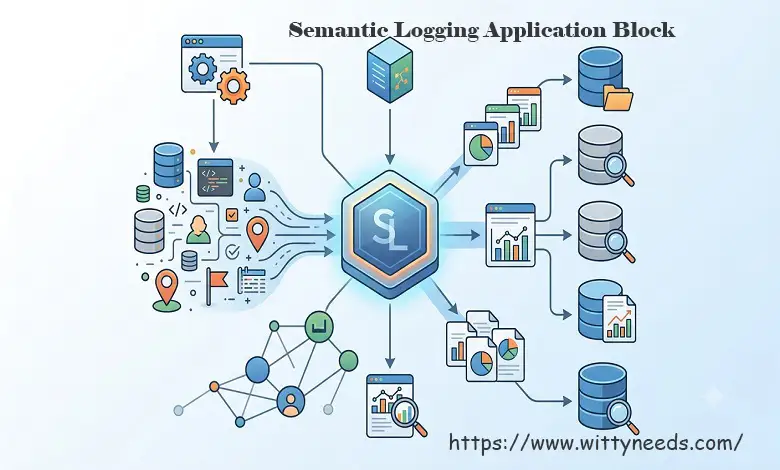
In modern software development, logging is much more than simply recording errors. Organizations rely on application logs to monitor performance, troubleshoot issues, strengthen security, and gain valuable operational insights. As applications become increasingly complex, traditional text-based logs often fail to provide the structure needed for effective analysis. This is where the Semantic Logging Application Block becomes important.
The Semantic Logging Application Block was designed to help developers create meaningful, structured logs instead of simple text messages. By organizing log data into clearly defined events and attributes, it becomes easier for both humans and machines to understand what is happening inside an application.
Whether you are a software developer, system administrator, DevOps engineer, or IT decision-maker, understanding semantic logging can significantly improve application monitoring and diagnostics.
What is Semantic Logging Application Block?
The Semantic Logging Application Block (SLAB) is a Microsoft Enterprise Library component designed to create structured, meaningful application logs. Instead of generating simple text messages, it records events with valuable context and metadata, making logs easier to search, analyze, and monitor.
A semantic log can include details such as:
- Event ID
- Severity level
- Timestamp
- Category
- User or transaction information
- Application context
Unlike traditional logs that might simply report an error, semantic logging captures the full story behind an event—who performed an action, what happened, when it occurred, and which system components were involved.
By providing richer context, the Semantic Logging Application Block helps developers and IT teams troubleshoot issues faster, improve monitoring, and gain deeper insights into application behaviour.
Why Traditional Logging Is No Longer Enough
For years, developers relied on text-based logging methods. While these systems were useful, they often created challenges as applications grew larger and more distributed.
Some common problems include:
Difficult Data Analysis: Searching through thousands of log entries manually can be time-consuming.
Inconsistent Message Formats: Different developers may write log messages differently, making automated processing difficult.
Limited Search Capabilities: Finding specific events often requires complex text matching techniques.
Lack of Context: Many log messages provide minimal information about what actually happened.
Poor Integration with Monitoring Tools: Modern analytics platforms perform best when data is structured and standardized.
These limitations have driven organizations toward structured logging solutions such as the Semantic Logging Application Block.
Understanding the Concept of Semantic Logging
Semantic logging focuses on recording the meaning behind an event rather than simply storing text.
Every event represents a specific business or system action.
Examples include:
- User login attempts
- Payment processing
- File uploads
- API requests
- Database operations
- Security alerts
Each event contains well-defined attributes that describe exactly what happened.
Because the data is structured, monitoring systems can automatically analyze and categorize events without complicated parsing rules.
This improves both operational efficiency and data accuracy.
Key Features of Semantic Logging Application Block
Structured Event Data
One of the most significant advantages of the Semantic Logging Application Block is its ability to generate structured information.
Each event contains predefined properties, ensuring consistency across the entire application.
High Performance Logging
Applications often generate thousands of events every second.
Semantic logging is designed to handle high event volumes while minimizing performance impact.
This makes it suitable for enterprise-scale environments.
Rich Context Information
Every event can include detailed contextual information, such as:
- User identifiers
- Transaction IDs
- Session details
- System states
- Application components
This context helps teams diagnose issues faster.
Multiple Output Destinations
Logs can be routed to various destinations, including:
- Databases
- Log management platforms
- Cloud storage
- Monitoring systems
- Analytics platforms
This flexibility supports a wide range of deployment scenarios.
Better Search and Filtering
Structured logs allow teams to filter information based on specific fields rather than searching through raw text.
This significantly reduces investigation time.
Also Read:Development Services Technology Partnership Integration: The Complete Guide for Modern Businesses
Benefits of Using Semantic Logging Application Block
Organizations adopting semantic logging often experience improvements in several key areas.
Faster Troubleshooting
Structured event information helps engineers quickly identify the root cause of problems.
Instead of reading hundreds of text entries, teams can isolate specific events within seconds.
Improved Monitoring
Monitoring systems can easily track important application events and generate alerts when unusual behaviour occurs.
Enhanced Security Visibility
Security teams can use structured logs to detect:
- Unauthorized access attempts
- Suspicious activities
- Privilege escalations
- Policy violations
Better Operational Insights
Business and technical teams gain access to valuable information about application behaviour and user interactions.
Simplified Compliance Reporting
Many industries require detailed audit trails.
Semantic logging provides the structured records needed for compliance and regulatory reporting.
Common Use Cases of Semantic Logging
Enterprise Software Applications
Large organizations use semantic logging to monitor mission-critical systems and ensure operational stability.
Cloud-Based Platforms
Cloud applications generate enormous amounts of event data.
Structured logging helps organizations manage this data efficiently.
E-Commerce Websites
Online stores rely on logging to track:
- Customer activity
- Order processing
- Payment transactions
- Inventory updates
Financial Services
Banks and financial institutions require detailed records of transactions and security events.
Semantic logging helps meet these requirements.
Healthcare Systems
Healthcare applications use structured logs to maintain audit trails while improving system reliability.
SaaS Products
Software-as-a-Service providers use semantic logging to monitor customer usage, diagnose issues, and optimize performance.
Semantic Logging vs Traditional Logging
Although both approaches serve the same purpose, their capabilities differ significantly.
| Feature | Traditional Logging | Semantic Logging |
| Data Structure | Unstructured | Structured |
| Searchability | Limited | Advanced |
| Automation Support | Low | High |
| Monitoring Integration | Basic | Excellent |
| Analytics Capabilities | Limited | Extensive |
| Context Information | Minimal | Rich |
| Scalability | Moderate | High |
As organizations adopt observability practices, semantic logging continues to provide clear advantages.
Best Practices for Semantic Logging
To maximize effectiveness, organizations should follow several best practices.
Define Clear Event Categories
Create standardized categories for:
- Authentication
- Transactions
- Errors
- Security
- Performance
Maintain Consistent Naming
Use meaningful and consistent event names across applications.
Avoid Sensitive Data
Never log confidential information such as:
- Passwords
- Credit card numbers
- Personal health records
Include Relevant Context
Every event should contain enough information to support troubleshooting without overwhelming the logging system.
Monitor Log Volume
Excessive logging can increase storage costs and complicate analysis.
Focus on collecting valuable information.
Challenges Organizations May Face
Despite its benefits, semantic logging is not without challenges.
Initial Learning Curve
Teams may need time to adapt to structured logging principles.
Migration Effort
Converting legacy logging systems can require significant planning.
Data Management
Structured logs can generate large amounts of information that must be stored and managed efficiently.
Governance Requirements
Organizations must establish standards to maintain consistency across applications.
However, these challenges are generally outweighed by the long-term benefits.
Why Semantic Logging Remains Relevant Today
Modern observability platforms rely heavily on structured telemetry data.
Although the original Semantic Logging Application Block is no longer the primary Microsoft-recommended logging solution, the concepts it introduced remain highly relevant.
Many modern technologies now embrace the same principles, including:
- Structured logging frameworks
- Centralized log management systems
- Cloud monitoring platforms
- Observability tools
- Distributed tracing solutions
The industry continues to move toward data-rich, machine-readable logging because it provides better operational intelligence.
Final Thoughts
The Semantic Logging Application Block played an important role in the evolution of application monitoring and diagnostics. By introducing structured, context-rich event logging, it helped organizations move beyond traditional text-based logs and toward more intelligent operational insights.
Today, the principles behind semantic logging continue to influence modern observability practices. Organizations that adopt structured logging benefit from faster troubleshooting, enhanced security monitoring, improved analytics, and improved overall application reliability.
As software systems continue to grow in complexity, semantic logging remains one of the most valuable approaches for understanding what is happening inside an application and ensuring it performs optimally.
FAQs:
Q: What is Semantic Logging Application Block?
A. Semantic Logging Application Block is a Microsoft framework designed to generate structured application logs that are easier to analyze and monitor.
Q: What is the main advantage of semantic logging?
A. The biggest advantage is structured data that improves searchability, monitoring, troubleshooting, and automation.
Q: Is semantic logging still relevant today?
A. Yes. Even though newer tools have emerged, the core concepts of semantic logging remain central to modern observability and monitoring systems.
Q: Who should use semantic logging?
A. Developers, DevOps teams, system administrators, cloud architects, and enterprise organizations can all benefit from structured logging practices.
Q: How does semantic logging improve troubleshooting?
A. It provides detailed contextual information about events, making it easier to identify root causes and resolve issues quickly.