
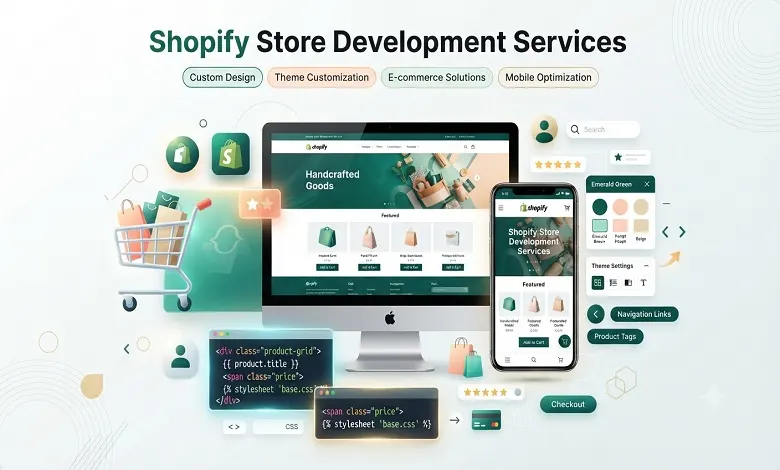
Launching an online store requires more than selecting an ecommerce platform and uploading products. Businesses need a well-organized storefront, convenient shopping features, secure payment options, and a reliable system for managing orders. Professional Shopify store development services help bring these elements together to create an ecommerce website that meets specific business requirements.
Shopify provides the tools needed to start and operate an online store, but the development approach can differ depending on the products, target customers, and business model. A small retail brand may need a straightforward storefront, while an established retailer might require custom functionality, external integrations, and advanced inventory management.
Understanding the development process helps businesses choose the right solutions, avoid unnecessary expenses, and create a store that can adapt as their operations grow.
What Is Shopify Store Development?
Shopify store development is the process of creating and configuring an ecommerce website using the Shopify platform. It involves designing the storefront, organizing products, configuring essential settings, and implementing the functionality required to sell products online.
The development process can include working with an existing Shopify theme or creating custom layouts and features. Depending on the project, developers may also integrate applications, connect external systems, and optimize the website for different devices.
A properly developed Shopify store should make it easy for customers to browse products, understand available options, and complete purchases. It should also provide store owners with practical tools for managing everyday ecommerce activities.
What Do Shopify Store Development Services Include?
The scope of development depends on the store’s requirements. However, most projects involve several important areas.
1. Store Planning and Requirement Analysis
Every successful development project starts with understanding the business. Before designing the storefront, developers should identify the products being sold, target customers, required features, and operational needs.
This planning stage helps determine the website structure, theme requirements, necessary applications, and possible integrations.
For example, a fashion store may need product filters for size and color, while a business selling personalized gifts may require custom product options.
2. Shopify Store Design and Setup
Store design determines how customers interact with the website. A clear layout, consistent branding, and organized navigation help visitors find relevant products without unnecessary effort.
The setup process generally includes:
- Shopify account and domain configuration.
- Theme selection and customization.
- Homepage and navigation development.
- Product and collection organization.
- About, contact, and policy pages.
- Basic store settings and configurations.
The design should reflect the brand while keeping usability and mobile responsiveness in mind.
3. Product and Collection Development
Product organization is an important part of ecommerce development. Customers should be able to browse relevant categories and understand the differences between available products.
Developers can configure product pages with descriptions, images, prices, variants, availability, and other relevant information.
Collections help group products according to categories, brands, product types, or other useful attributes. A logical collection structure improves navigation and supports a more organized shopping experience.
4. Shopping Cart and Checkout Configuration
The shopping cart and checkout process directly affect how customers complete purchases. Important details such as product quantities, shipping information, payment options, and order summaries should be presented clearly.
Shopify provides built-in checkout functionality, while available customization options depend on the store’s Shopify plan and supported features.
Developers can configure the shopping experience and relevant integrations to make purchasing more convenient.
5. Payment and Shipping Integration
An ecommerce store needs suitable payment and delivery options before it can serve customers effectively.
Shopify supports different payment providers and shipping configurations depending on the business’s country and eligibility. Development may involve setting up supported payment methods, delivery zones, shipping rates, and relevant applications.
These settings should be tested carefully to ensure customers receive accurate information during checkout.
6. Third-Party App Integration
Shopify applications help extend the functionality of an online store. Businesses may use applications for reviews, email marketing, customer support, subscriptions, inventory management, and other requirements.
Professional development helps identify appropriate applications and configure them correctly. When standard applications cannot support a specific requirement, developers may consider custom integrations using Shopify APIs and other supported tools.
The objective is to add useful functionality without introducing unnecessary complexity.
Shopify Ecommerce Development Services for Different Business Models
Not every ecommerce business operates in the same way. The development requirements of a clothing retailer may be very different from those of a subscription business or a wholesale supplier.
Fashion and apparel stores: These stores often need size and color variants, product filters, image galleries, and organized collections to help customers compare products.
Electronics stores: Detailed specifications, product comparisons, warranty information, and compatibility details can help customers make informed purchasing decisions.
Beauty and skincare businesses: Product ingredients, usage instructions, customer reviews, and product recommendations may be important parts of the storefront.
Subscription businesses: Recurring billing, subscription management, and customer account features may require suitable applications or custom integrations.
B2B and wholesale businesses: Depending on their requirements, these businesses may need customer-specific pricing, bulk ordering, company accounts, and specialized purchasing workflows.
Professional Shopify ecommerce development services help adapt the platform to these different business models while maintaining a consistent shopping experience.
Important Features of a Well-Developed Shopify Store
A successful ecommerce website should balance appearance, usability, and functionality. The following features are worth considering during development.
Responsive Design
The storefront should work across smartphones, tablets, and desktop computers. Product images, menus, buttons, and page layouts need to remain usable on smaller screens.
Easy Navigation
Clear menus, meaningful categories, and useful product filters help visitors find products more efficiently.
Secure Shopping Experience
Businesses should configure supported payment methods, maintain appropriate account security, and use clear policies for orders, returns, and customer information.
Search-Friendly Website Structure
Descriptive URLs, organized collections, relevant page titles, internal links, and appropriate metadata help search engines understand the website.
Fast-Loading Pages
Optimized images, efficient theme code, and careful application selection can help improve loading performance and customer experience.
Useful Product Information
Product pages should provide accurate descriptions, specifications, images, pricing, and available options so customers can make informed decisions.
Why Is SEO Important During Shopify Store Development?
SEO should be considered while building the store because some structural and technical decisions can influence how search engines discover and interpret website pages.
A search-friendly Shopify website should have a logical page hierarchy, useful product and collection content, descriptive metadata, and appropriate internal links.
Important SEO considerations include:
- Keyword research for product and collection pages.
- Unique page titles and meta descriptions.
- Descriptive product URLs.
- Image optimization and alt text.
- Canonical URL configuration.
- XML sitemap and robots.txt review.
- Relevant structured data.
- Mobile usability and page performance.
For example, a store selling office furniture should organize its products into meaningful categories such as office chairs, desks, and storage furniture. Each category should provide useful information instead of relying only on product listings.
SEO development creates a technical foundation, but long-term organic growth also requires useful content, relevant backlinks, and regular performance improvements.
How to Choose the Right Shopify Development Partner
Choosing a suitable development partner is important because the quality of the work can affect the store’s usability, functionality, and future maintenance.
Before hiring a developer or agency, consider the following factors.
Relevant project experience: Review previous Shopify projects and check whether the developer has handled requirements similar to yours.
Technical capabilities: Ask about experience with Shopify themes, Liquid, APIs, app integrations, and responsive development.
Clear project scope: Make sure the proposal explains the features, deliverables, estimated timeline, and responsibilities.
Testing process: Confirm that product pages, navigation, payment configurations, forms, and integrations will be tested before launch.
Post-launch support: Understand how technical issues, future improvements, and maintenance requests will be handled.
A suitable development partner should explain the proposed approach clearly rather than recommending unnecessary features or promising guaranteed sales and rankings.
Common Mistakes to Avoid When Developing a Shopify Store
Some development decisions can create unnecessary complications after a store goes live. Businesses should pay attention to these common mistakes:
- Choosing a theme without evaluating requirements: A theme should support the store’s products, layout, and functionality needs.
- Using poor-quality product information: Incomplete descriptions and images can make purchasing decisions difficult.
- Installing unnecessary applications: Too many applications can increase costs and add scripts that affect performance.
- Ignoring mobile testing: A store should be checked on different screen sizes before launch.
- Overlooking SEO configuration: Missing metadata, poor URL management, and weak internal linking can create avoidable SEO problems.
- Launching without proper testing: Payment settings, shipping rules, product variants, and important integrations should be checked before accepting orders.
Careful planning and testing can reduce these problems and make the store easier to manage.
Final Thoughts
Developing an ecommerce website involves several connected decisions, from choosing the right theme and organizing products to configuring payments, integrating applications, and preparing the website for search engines.
Professional Shopify store development services help businesses bring these elements together in a structured way. The right development approach depends on the store’s products, customers, operational requirements, and plans for future growth.
By focusing on usability, functionality, performance, and a clear website structure, businesses can create a Shopify store that supports everyday operations and provides customers with a convenient shopping experience.
Frequently Asked Questions
Q: What are Shopify store development services?
A. Shopify store development services involve building, configuring, and customizing online stores using Shopify. They may include theme development, product setup, payment configuration, application integration, and performance optimization.
Q: What is included in Shopify ecommerce development services?
A. These services may include ecommerce planning, storefront design, product and collection setup, cart and checkout configuration, payment and shipping integration, custom functionality, and ongoing technical support.
Q: Can Shopify developers create a custom ecommerce store?
A. Yes. Developers can customize existing Shopify themes or build custom storefront components using Shopify’s supported development technologies. The approach depends on the required design and functionality.
Q: Is Shopify suitable for a new online business?
A. Shopify can be a suitable option for new businesses because it provides tools for managing products, orders, payments, and storefront content without requiring the business to build an ecommerce platform from scratch.
Q: Can I migrate my existing ecommerce store to Shopify?
A. Yes. Eligible product data, customer information, order records, and website content can be migrated from platforms such as WooCommerce and Magento. URL mapping and redirects should also be considered to protect existing SEO value.
Q: How important is SEO for a Shopify store?
A. SEO helps potential customers discover products through search engines. A well-organized website, optimized product pages, useful content, relevant internal links, and good technical configuration can support organic visibility.
Q: Do Shopify stores need custom development?
A. Not always. Many businesses can start with an existing theme and built-in Shopify features. Custom development becomes useful when specific design, functionality, or integration requirements cannot be handled effectively through standard options.